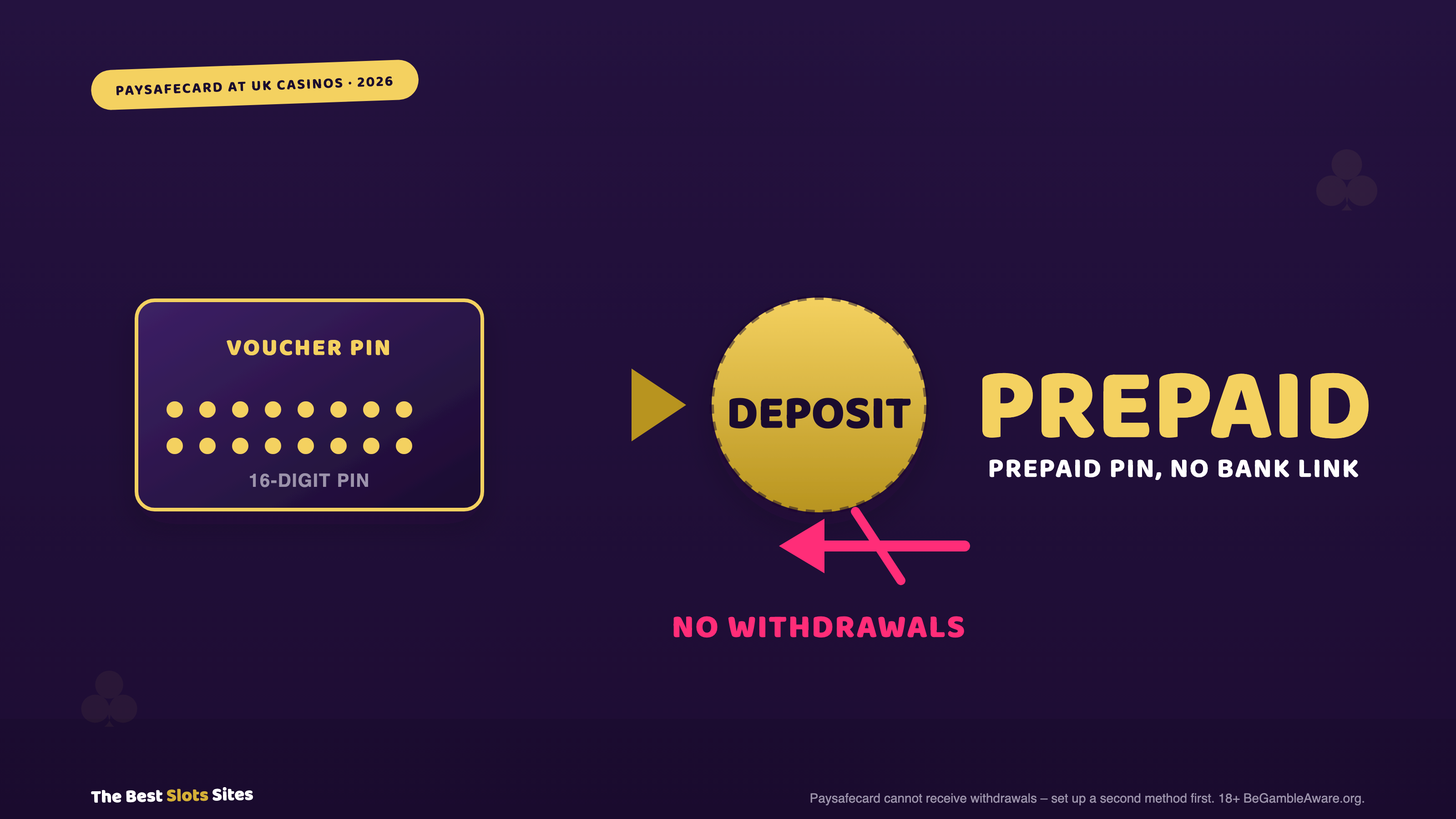
Paysafecard is a prepaid voucher: you buy a code (in-store or online) for a fixed amount, then enter that 16-digit PIN at the casino cashier to deposit — no bank account, card, or personal financial details are ever linked. It's popular precisely because of that separation, but it comes with one significant limitation every player should know before relying on it: you cannot withdraw winnings back to a paysafecard.
How a Paysafecard Deposit Works
You buy a paysafecard voucher for a set amount (commonly available in fixed denominations from newsagents, supermarkets, and paysafecard's own app/website), then type the PIN into the casino's cashier under Paysafecard as the deposit method. The value transfers instantly and you can't spend more than the voucher's face value — there's no way to overspend or go into any kind of debit, since it isn't linked to a bank account or credit line at all.
Why You Can’t Withdraw to It
A paysafecard voucher is a one-way, anonymous prepaid code — it has no account identity or bank details attached that a casino could send money back to. That's a deliberate part of the product's design (it's built for anonymous spending, not for receiving funds), and it applies at every casino, not just some: no UK-licensed operator can pay a withdrawal to a paysafecard, regardless of how the deposit was made.
What to Set Up Instead for Withdrawals
If you deposit with paysafecard, add a second payment method — typically a debit card or bank account in your own verified name — before you need to withdraw. Most UK casinos will ask for this at the withdrawal stage anyway, since payouts have to go to a verified method belonging to the account holder as an anti-money-laundering check. Sorting this out at sign-up, rather than at your first win, avoids a delay when you actually want your money out.
Why Some Players Prefer It Anyway
Because a paysafecard voucher has a fixed, prepaid value with no link to a bank account or credit line, some players use it specifically as a built-in spending cap — you can only deposit what you've already bought, full stop. That can be a genuinely useful budgeting tool as part of a wider approach to setting your own limits, though it's not a substitute for a casino's own deposit limit or self-exclusion tools if you want firmer, account-level controls.
Whichever payment method you use, only deposit money you've budgeted to lose — a fast or convenient payment method doesn't change the odds. See our responsible gambling policy for tools and support if you'd like to set deposit limits or take a break.